

Diamonds, Easter Eggs, and Formula 1
A special fashion report from the Australian Grand Prix


The first race of the year is behind us. And, well, it was interesting…
By now, you’ve read a thousand posts about the new Regs, and Mercedes’s massive advantage, and the drivers’ (and fans’) gripes about what 2026 has in store on track.
But there was something at Australia GP weekend that managed to break through that noise: VCARB driver Liam Lawson’s partner Hannah St. John’s diamond necklace.
Right when Sunday Collective’s Manon Lopez saw the necklace, she reached out to Hannah to learn more about it. For Manon, who’s worked in marketing and communication at leading fashion and luxury houses including Louis Vuitton, CHANEL, and Sandro for the last decade, the $350,000 24-circuit diamond necklace perfectly encapsulated a trend she’s been tracking: the Easter Egg fashion piece.
Here’s Manon on why Hannah’s necklace went viral this weekend, and what it says about the future of F1’s paddock style.

Diamonds, Easter Eggs, and Formula 1
From a racetrack diamond necklace to custom Ferrari clutch — how “Easter eggs” became the ultimate status symbol.
By Manon Lopez
Virality is a strange beast, often chased but ever shifting. In fashion, where I’ve spent a decade working and writing and thinking, a viral moment has become part of the calculus of a launch.
Last Thursday, at Glamour on the Grid, Liam Lawson’s partner Hannah St. John delivered the season’s first viral moment via a breathtaking necklace.
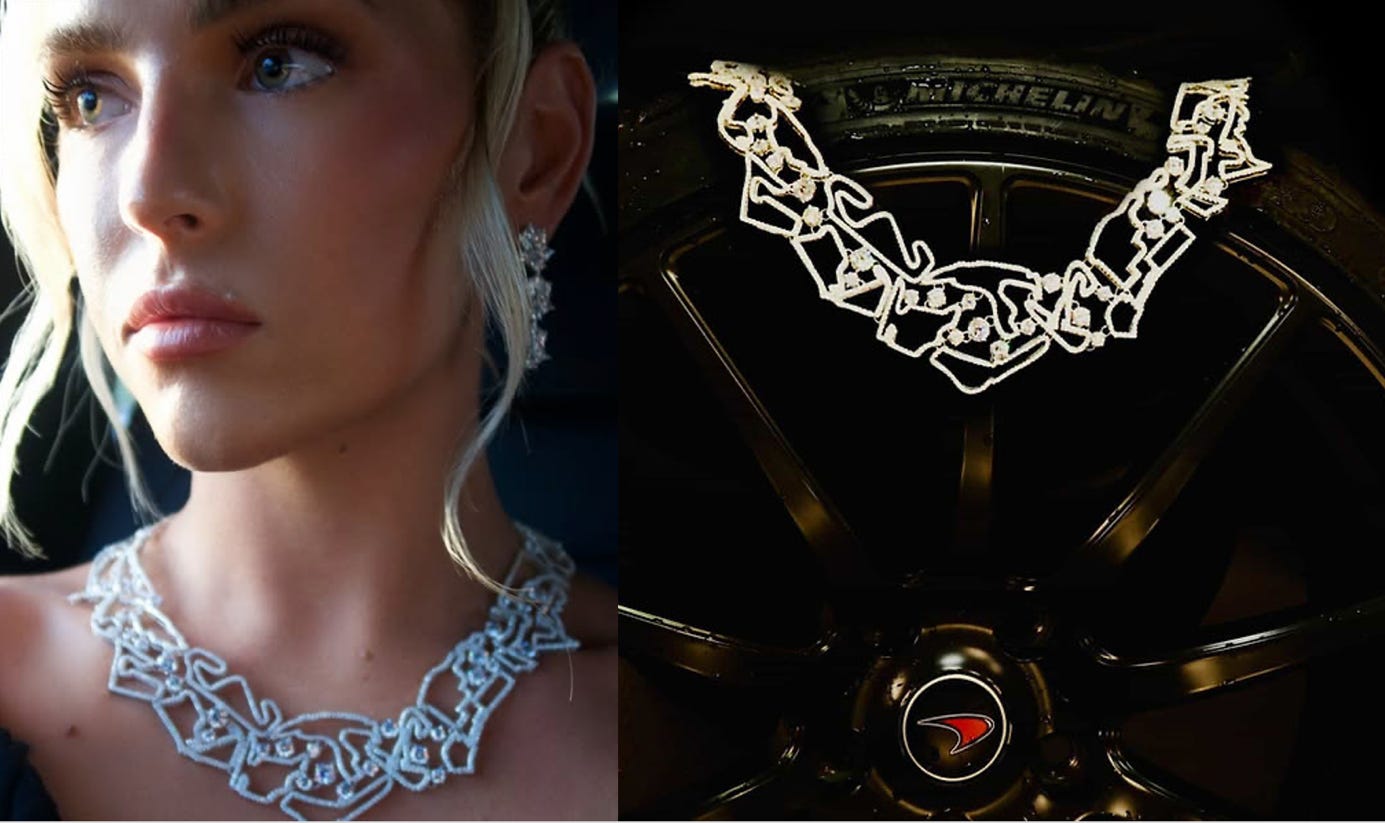
Right when I saw it, I reached out to Hannah, who told me the story of how she came to wear this work of art.
Hannah met Andrew Mitchell (director, diamond setter, and master jeweller at Martin Rogers Jeweller) back in 2024 at the Adelaide Motorsport Festival, and they stayed in contact ever since. A couple of weeks ago, a friend of hers saw the finished necklace and sent Hannah a picture. Andrew was looking for an opportunity to showcase the necklace in Melbourne, Hannah was planning to attend Glamour on the Grid, and the rest is history.
The necklace, named La Velocità One, contains thousands of diamonds and incorporates all the racetracks from the 2026 F1 season. But the level of detail doesn’t stop there. The necklace was crafted to follow the F1 calendar itself, placing the Melbourne track first, followed by China, Japan and so on, with subtle overlaps tying the entire piece together.
Hannah told me she felt it was a “privilege to wear it and was so honored that Andrew chose me to wear it” and styled her entire look around the necklace (as we all would).
Hannah has a huge following on Instagram and TikTok, where she shares a behind-the-scenes look at the global life of the girlfriend of an F1 driver. It's glamorous, stylish, and aspirational (i.e. perfect for both F1 and social media).
In a way, she did expect, or at least hoped, the necklace to go viral because of Andrew’s brilliant idea and flawless execution.
As a fashion and luxury aficionado, I’m obsessed with craftsmanship. For me, an idea or design is worth nothing if the execution isn’t flawless. In the case of this necklace, the outcome is outstanding. The design is both striking and timeless. I was honestly convinced it had been created by a major jeweller on Place Vendôme.
The Devil is in the Details
But why did this work? What about it broke through in a very crowded racing weekend?
We live in the Age of the Easter Egg — with Taylor Swift the queen of the form, but many a show, movie, and artist getting in on the fun. And this necklace scratched that itch for fans. Subtle details have always been a hallmark of luxury; a way to signal that “if you know, you know” and if you don’t, well, you should find out…
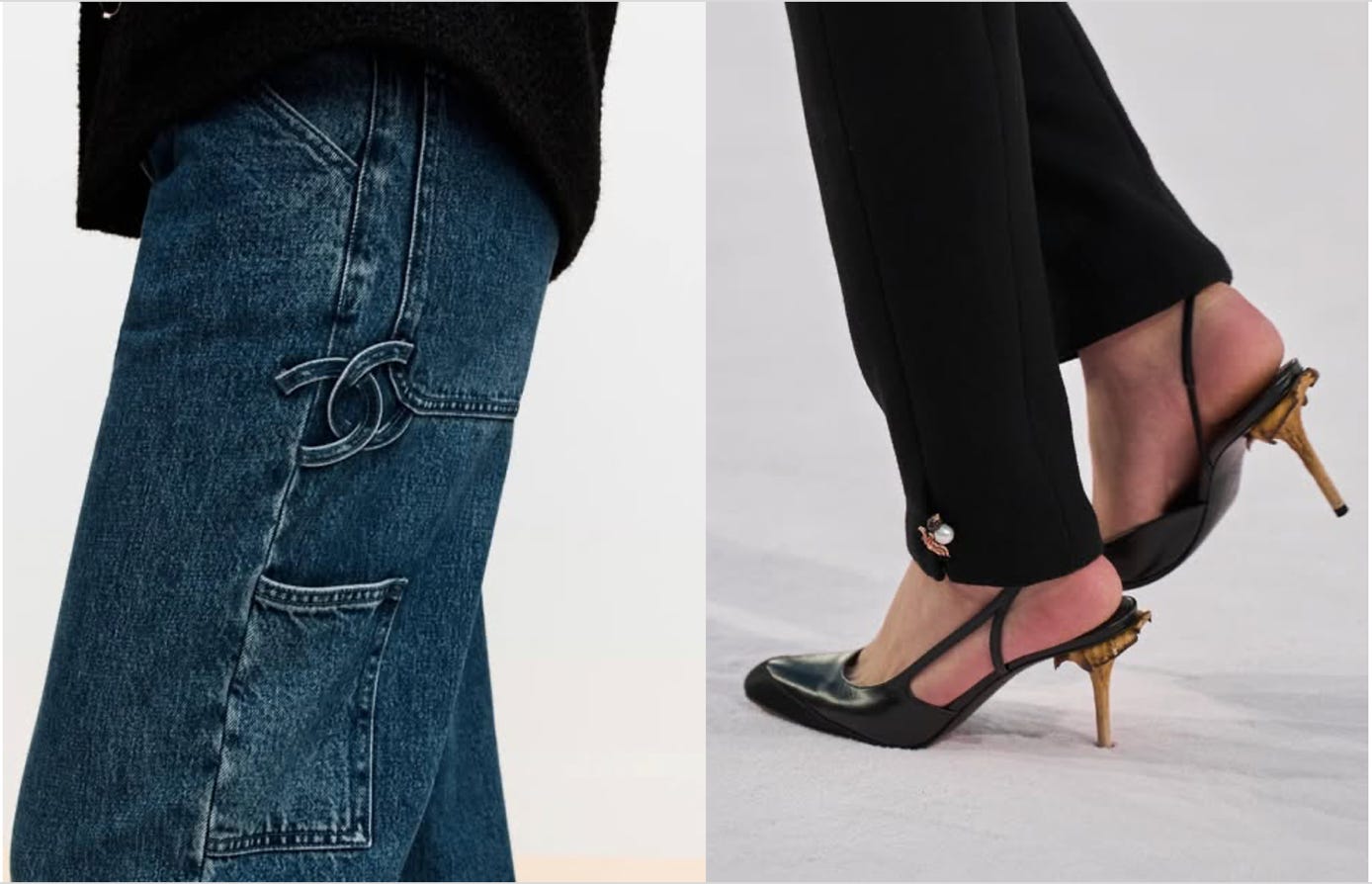
In fashion, these are often nods to the history of a House: archive looks, objects that belonged to the founder, or personal stories. Gabrielle Chanel, for instance, owned a collection of Coromandel wood panels in her apartment. These panels inspired numerous designs over the years, including a stunning embroidered coat created by Karl Lagerfeld for the Fall/Winter 1996–1997 Haute Couture collection. Similarly, Monsieur Dior was famously superstitious and always carried a lucky charm in his pocket: a star, a clover or a piece of wood. Today, these motifs have become staples of Dior collections.
Going back to Hannah’s necklace: if you don’t know Formula 1, you might simply appreciate the architectural beauty of the piece. But if you do know F1… it feels like unlocking a secret.
There is a strong sense of belonging that comes with these Easter Eggs. And the thrill of being among the first to spot them, before they go viral, is exhilarating. Done wrong, it can read as desperate fan service; but done right, it’s an invitation to dive deeper into an artform you love.
That’s why there are entire Reddit threads, Telegram channels, and online communities dedicated to decoding art in all its forms: Swifties, the newest true crime story, or fashion weeks and paddocks around the globe.
Why Can’t the Paddock be a Red Carpet?
Fashion obsessives like me might study every runway look during fashion weeks, but the loudest designer showcase these days is still the Hollywood red carpet. And the art of Easter Egg has found its way into movie marketing.
Zendaya has mastered this “method dressing” strategy for Dune, Challengers, and Spider-Man. Timothée Chalamet went all orange for Marty Supreme.
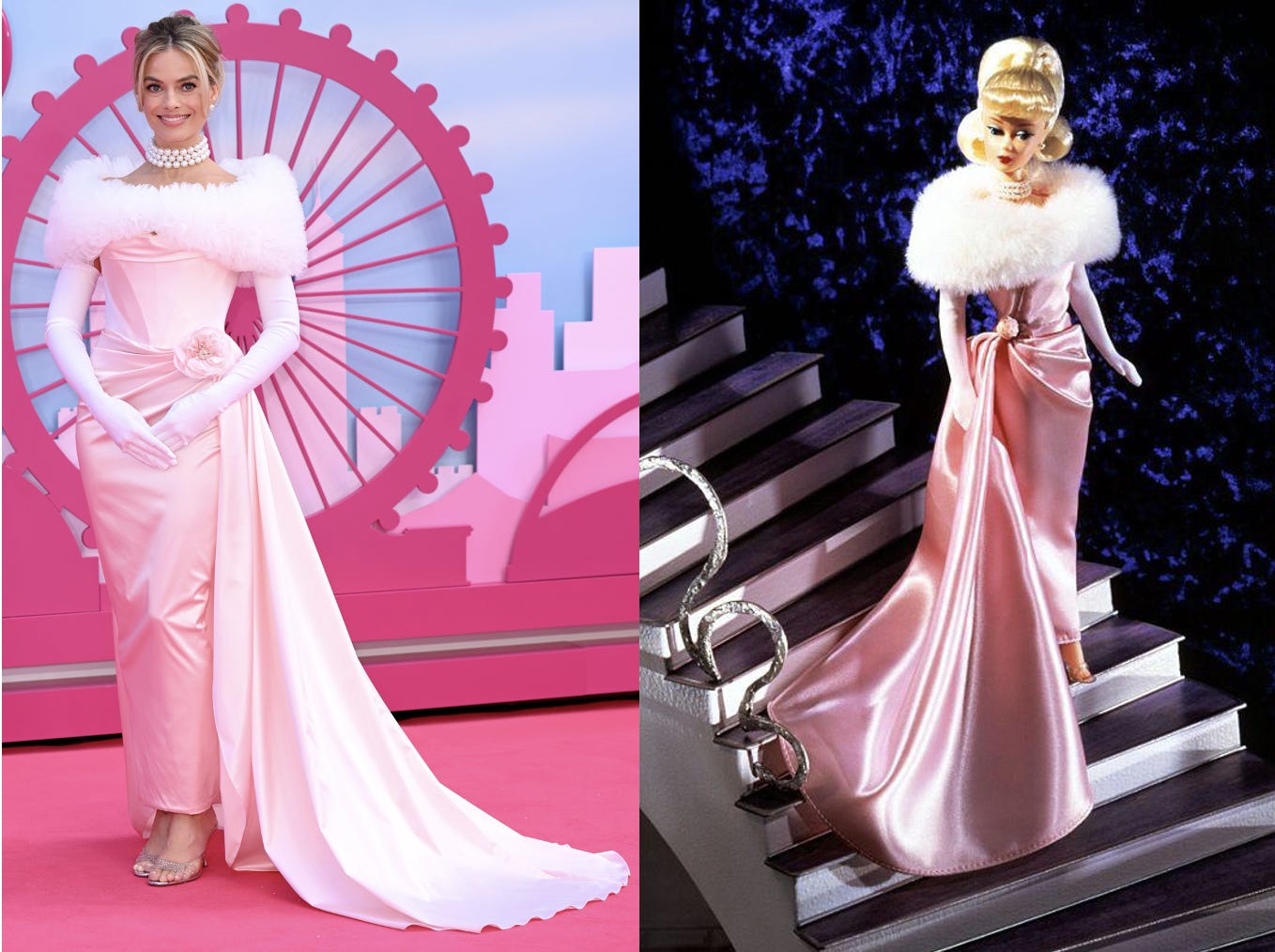
And during the Barbie press tour, many of Margot Robbie’s many-shades-of-pink outfits became a sensation: each were exact replicas, or heavily inspired recreations, of real Barbie dolls, spanning from the 1960s to the 2010s.
For Wuthering Heights, Robbie did it again: mixing aesthetic looks that matched the film while creating viral moments via an iconic Easter Egg. For the UK premiere, she wore a replica of “The Bracelet of Charlotte,” a mourning bracelet owned and worn by author Charlotte Brontë, sister of Emily Brontë, the author of Wuthering Heights. The internet went wild over this small accessory, speculating whether she was wearing the original (which contains strands of hair from Emily and Anne Brontë).
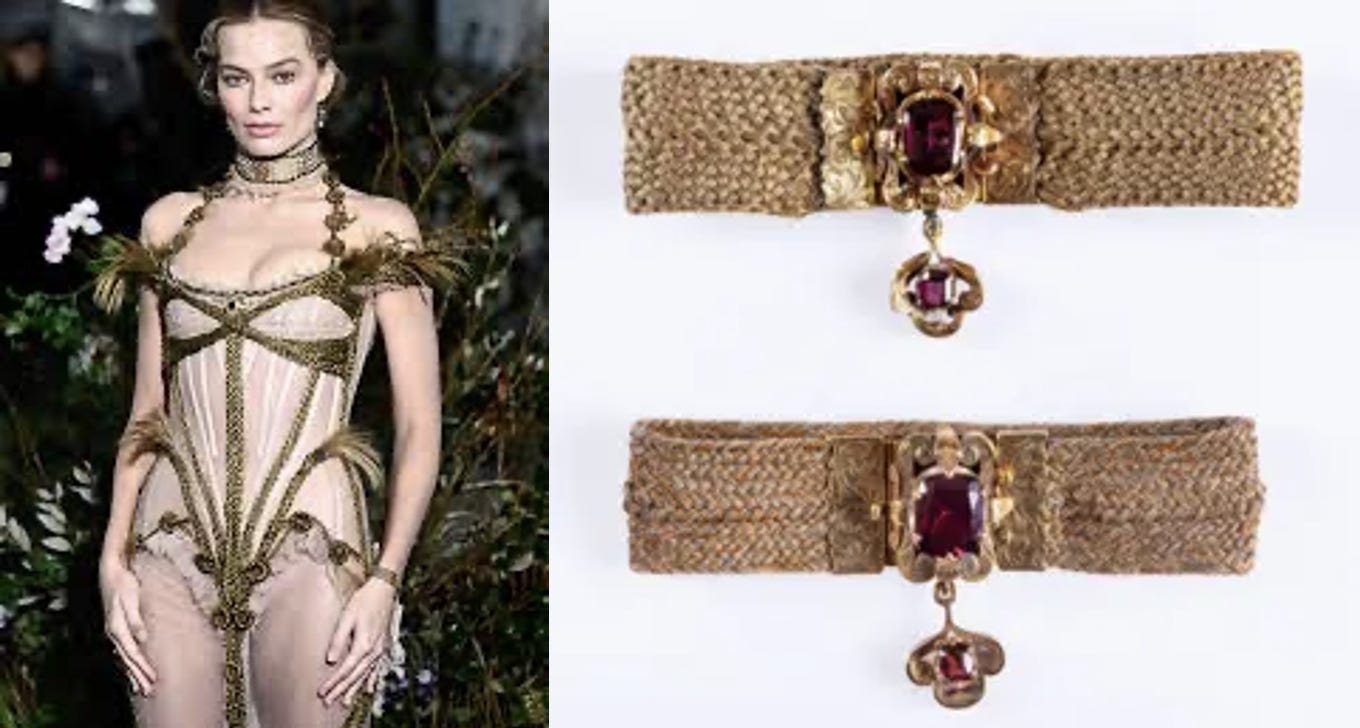
This attention to detail is what transforms a look into a story. It’s what turns a press tour into a global phenomenon, and what elevates a stylist into a true marketer and mastermind, in my humble opinion.
A movie might have eight to ten premieres and press events worldwide. If you count red carpets and paparazzi appearances, that’s around fifteen to twenty looks. Formula 1, on the other hand, has 24 race weekends (from Thursday to Sunday) providing 96 opportunities to be photographed by countless photographers. That’s why brands, especially fashion brands, want to enter the F1 world: the exposure is simply unmatched.
The last time we saw a similarly viral fashion moment was at the Chinese Grand Prix in 2025. Alexandra Leclerc was spotted carrying the Maranello clutch specially designed for the 2024 Monza Grand Prix in collaboration with Charles Leclerc.
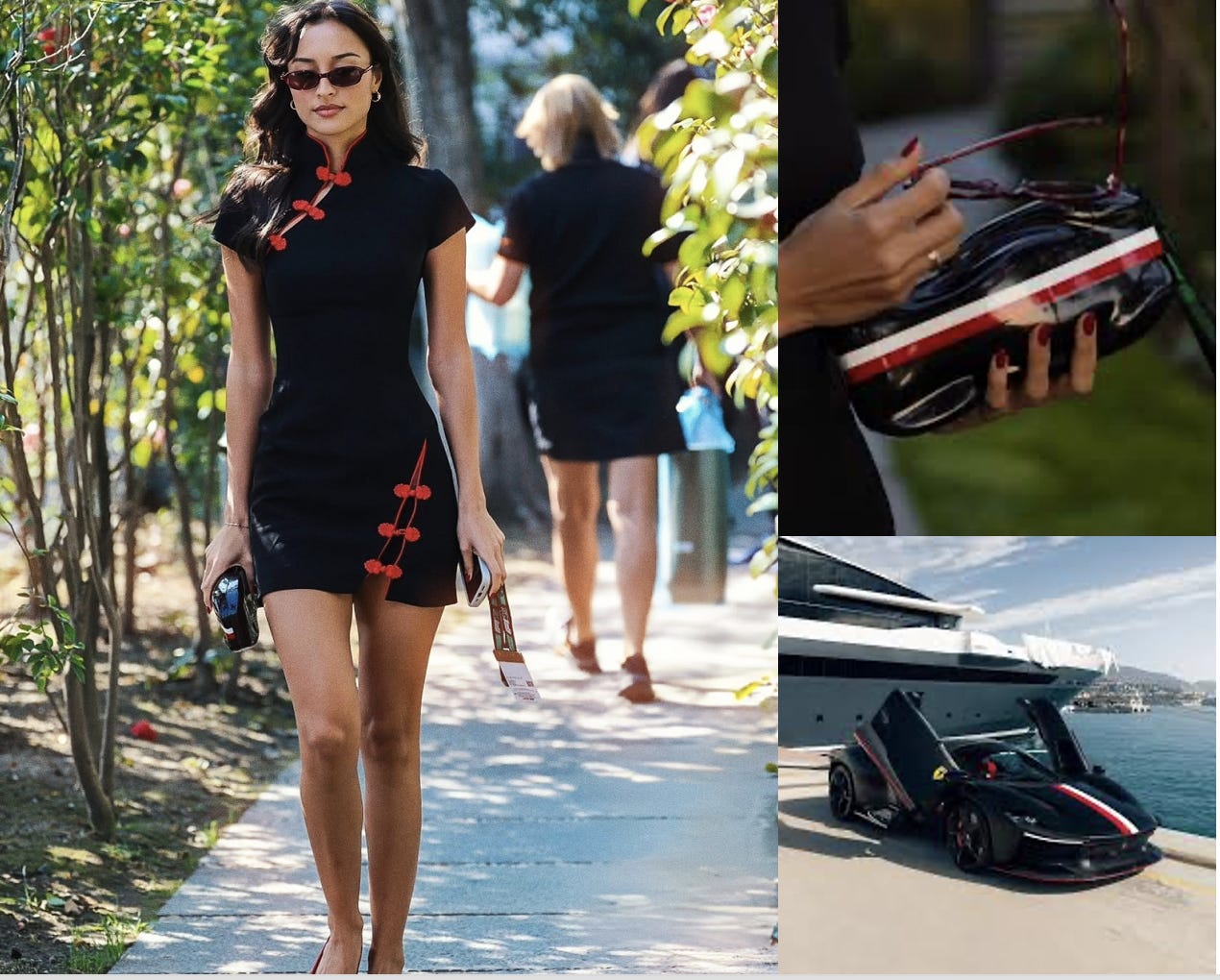
The fact that this minaudière (a small rigid handbag) is rare already made it interesting. According to Ferrari, only nine are produced each year in a color selected by the style office from the brand’s vast palette, and they can produce one or two unique pieces at most.
But what captured the internet’s attention, beyond the custom element, was the Easter Egg behind it. Her custom clutch perfectly mirrored the livery of Charles’s Daytona SP3 — it even had the Monaco flag on top.
There is immense power in these subtle nods. They signal that you understand the world you are stepping into, that you grasp its codes, its inside jokes and its history. And by playing with them, you make that world your own.
It’s the ultimate signal of belonging, but also the most subtle and intelligent way to show it, reserved only for those in the know. It exists in the province of exclusivity, but also invites in your most devoted and internet-native fans. So, clearly, it’s a perfect match for the new world of Formula 1.
 | A guest post by
|